Stops along my journey south
I’ll tell you about it the way I would over a coffee, without maps spread across the table and without the rush to get straight to the point.
There was a time when I decided to drive along the Spanish coast.
Not all of it, that’s true. But enough to make me think, in the end: “I’ll do the rest next time.”Because it always happens like this before one journey ends, you’re already imagining the next one. As if the road leaves you hungry instead of tired.
I left Valencia and reached Málaga in six days, without rushing as one might expect and without trying to collect places, letting the road set the rhythm instead. I’ve never been a big city lover; I prefer kilometres unfolding ahead, landscapes changing suddenly, and that feeling of freedom that arrives when you realise you don’t have to prove anything to anyone, not even to yourself.
Between calm winter seas, unexpected miradores, desert landscapes, snow-covered mountains and cities blending Arab and European influences, this road trip became much more than a simple itinerary.
It was a journey to savour slowly, just like a good coffee, unhurried, letting the flavour linger.
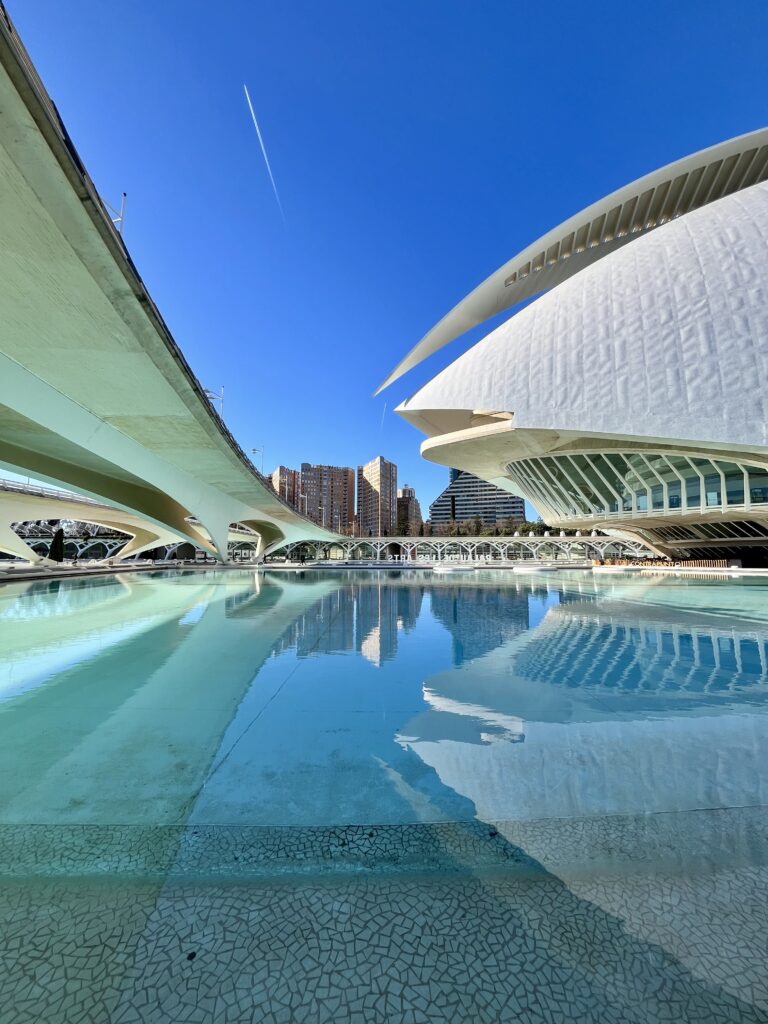
Valencia, the starting point
Valencia is the perfect place to begin:
the capital of the Valencian Community, a vibrant and luminous city with a rich cultural heritage.
If you can, I recommend staying in the city centre. It isn’t the cheapest option, but with a bit of luck you can find great places to stay, especially during the low season.
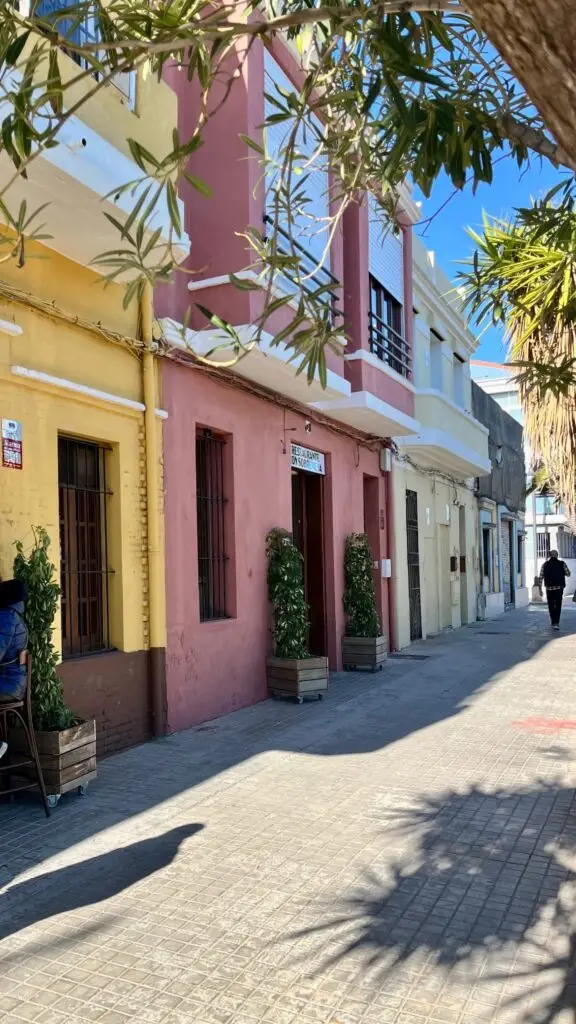
Walking through the old town is the best way to immediately step into the Spanish atmosphere. And of course, you shouldn’t miss an authentic Valencian paella, traditionally prepared with chicken and rabbit, just as local tradition dictates.
Costa Blanca: from Jávea to Calpe
The next day I picked up the car.
And everything suddenly felt easier, I could already feel a sense of freedom in the air.
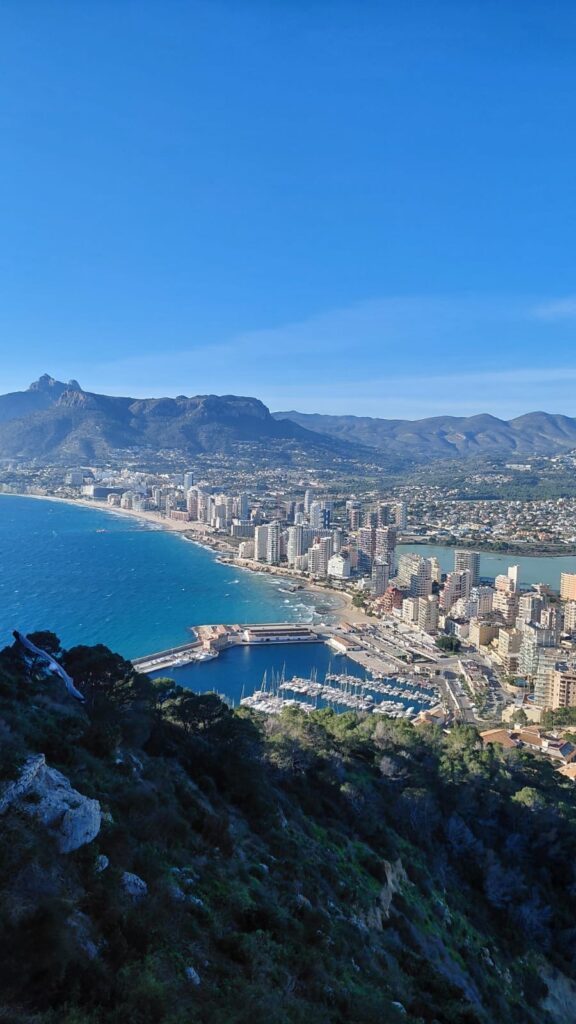
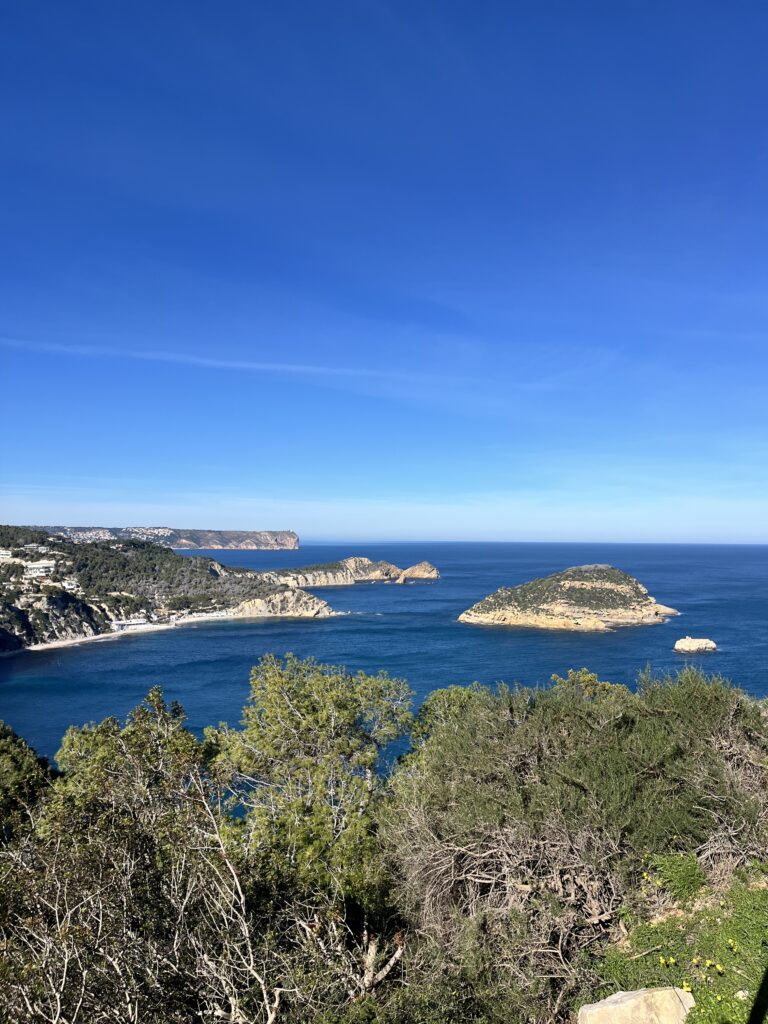
The first part of the journey crosses the Costa Blanca, one of the most scenic stretches along southern Spain’s coastline. The road itself became the true thread of the trip: calm seas, panoramic viewpoints, cliffs plunging into the water, and small white towns overlooking the Mediterranean.
The scent of the sea felt almost like a lullaby.
From Jávea to Calpe, passing through Altea, every curve revealed a different perspective. In Benidorm, instead, the contrast was total: skyscrapers, a skyline, and a sunset that looked as if it belonged to an American city.
And almost at the end of every stop, there was always red wine to warm you up and jamón melting in your mouth. A small evening ritual before packing everything back into the backpack and setting off again the next day, without really knowing what awaited beyond the next bend.
From Alicante to Almería: the desert side of the southern coast
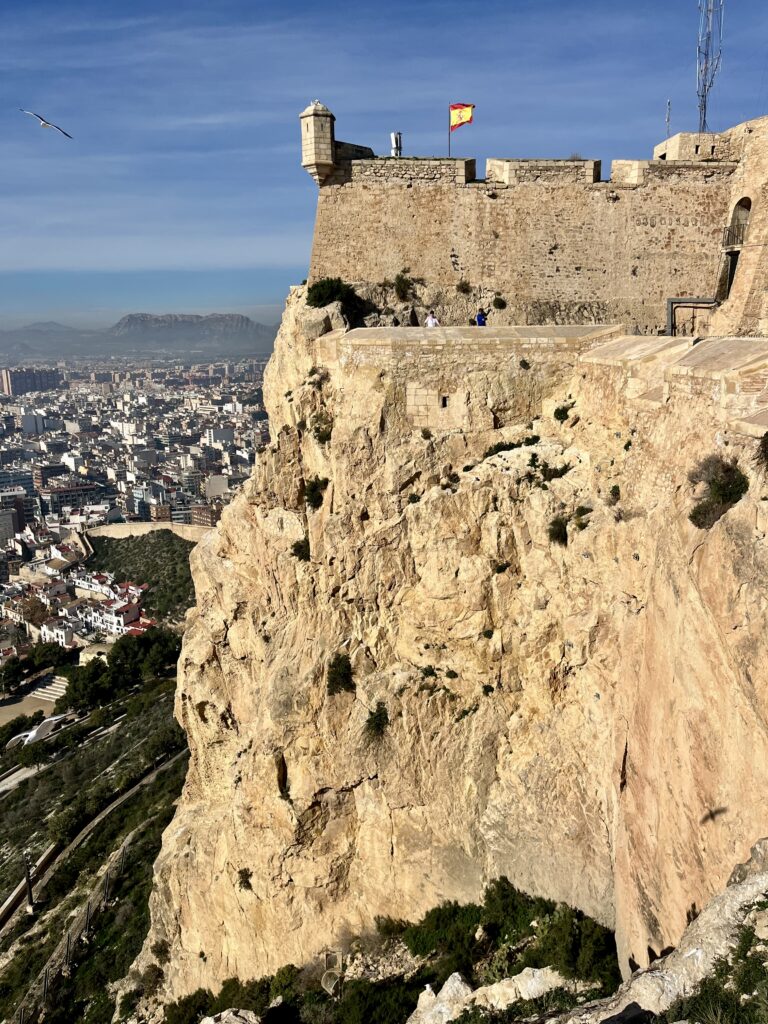
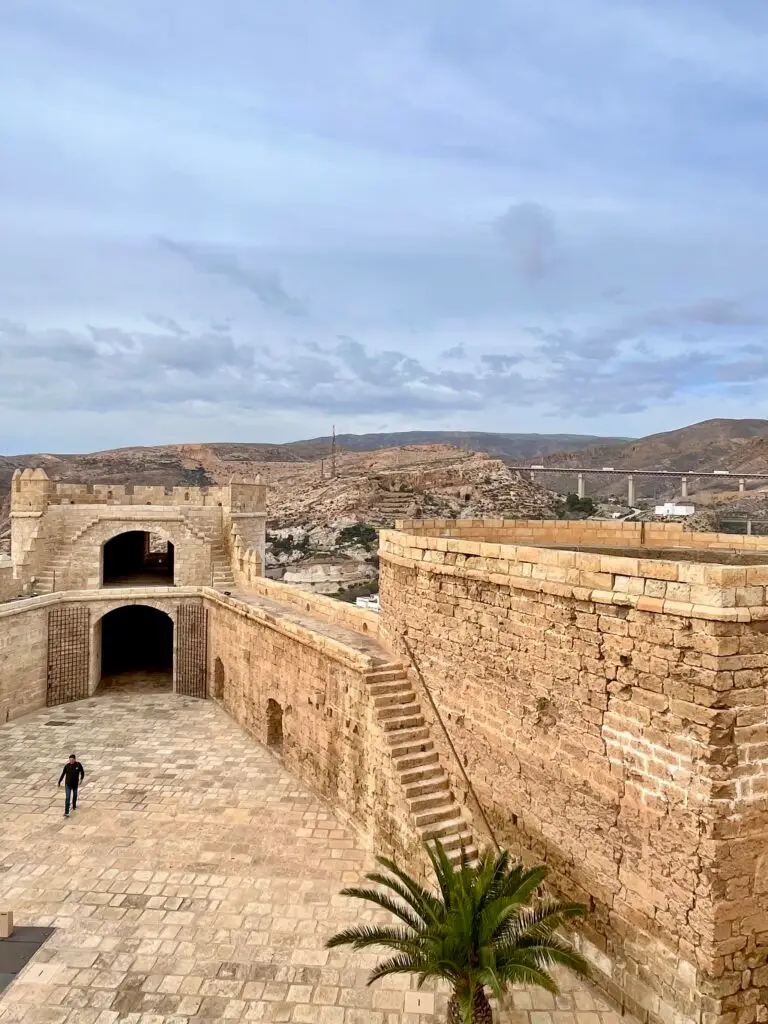
Continuing from Alicante towards Almería, the landscape changed once again: rocks, desert areas, and an atmosphere that feels almost like the Wild West.
Here, Spain begins to feel more Arab than European, and the alcazabas start telling a different story, perched dramatically above the sea.
Architecture and colors shift too, becoming warmer and more earthy.
If you love the contrast between Arab culture and the sea, you might also enjoy reading about my viaggio nel nord del Marocco.
Granada and the Sierra Nevada
Granada was one of the most intense stops of this road trip. Even though it doesn’t overlook the sea, it’s a detour absolutely worth taking. The Alhambra, with its Alcazaba, dominates the city from above and is the most important monumental complex in Andalusia, a place where I spent several unhurried hours.
For tickets, I recommend purchasing them online through the sito ufficiale.
The city is surrounded by the snow-covered mountains of the Sierra Nevada.
Driving up into the mountains became one of the biggest surprises of the journey. Within just a few hours, I moved from desert landscapes to snow, reaching over 2,500 meters in altitude.
And yet, the truth is that I don’t love snow or high altitudes. I’m a creature of the sea, of open horizons, not of roads that climb higher and grow narrower.
The descent, however, wasn’t easy. The road was panoramic and breathtaking, but at times dangerous. I had to take several detours, and my phone signal kept disappearing, as if it too had decided to leave me alone.
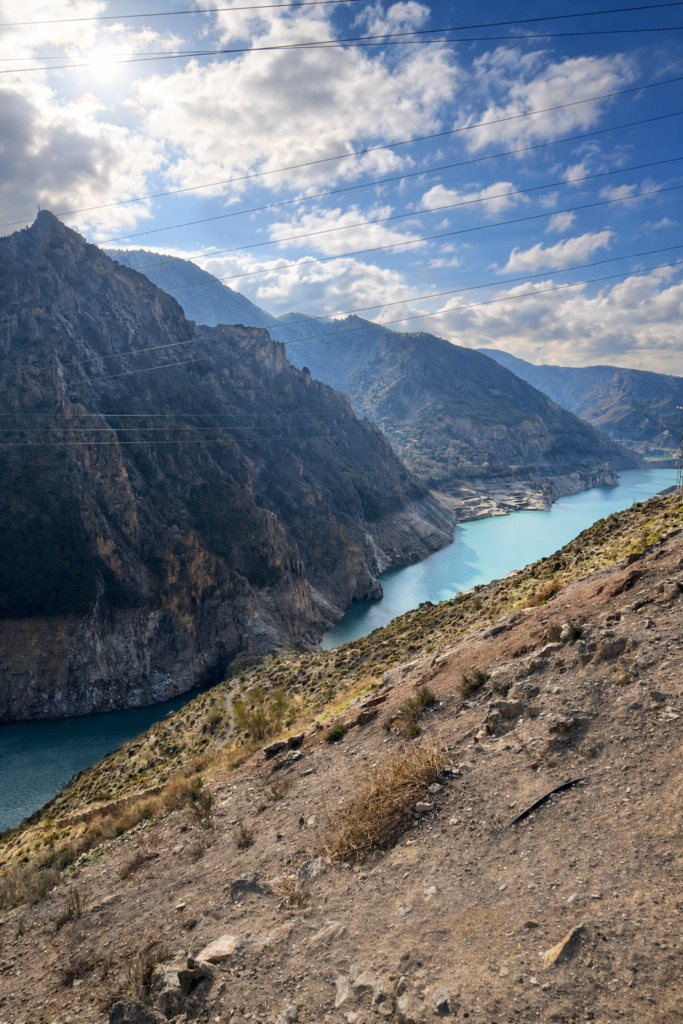
But at the end of the descent came an unexpected reward: an intense blue lake cutting through the mountains. I stopped there, in silence, simply taking in a landscape that only the mountains know how to offer.
Malaga and the End of the Road Trip
The final stop was Malaga, Picasso’s city, filled with lively squares and deep-rooted traditions.
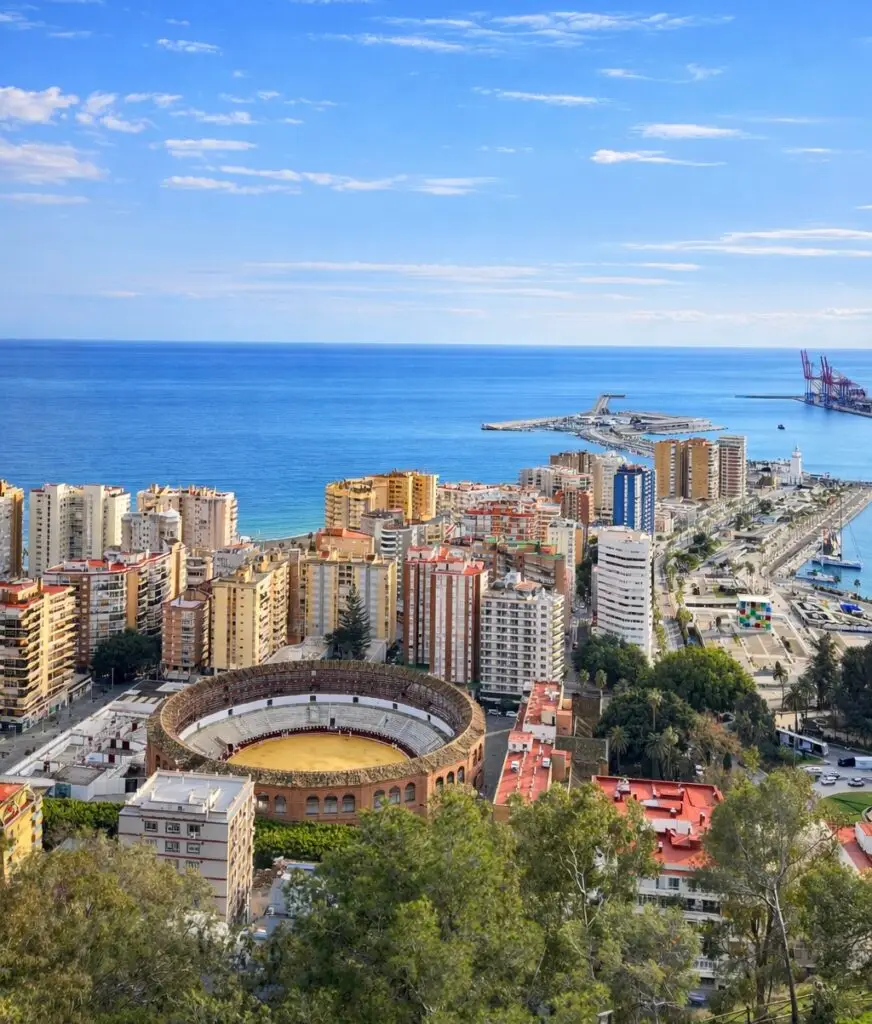
closed my journey watching the sunset from the Mirador de Gibralfaro: a colorful view stretching over the city and the Plaza de Toros de La Malagueta, the bullring that still preserves a deeply rooted part of Spanish culture.
This road trip wasn’t just about distance covered, but about a different way of crossing Spain. Slowly. Listening to the road. Accepting changing landscapes without getting lost in must-see stops that, over time, risk becoming exhausting and making you forget the real reason for leaving: the journey itself.
From the sea to the desert, from the intense light of Andalusia to the cooler air of the Sierra Nevada.
And maybe that’s exactly the beauty of a road trip: it never really lets you stand still. You return home carrying a piece of the road with you, and an unspoken promise to leave again soon.
Maybe along the stretch of coast still left unexplored
Maybe over another coffee.